Leadership in the Absence of Certainty

Leadership in the Absence of Certainty
In a workplace defined by rapid change, economic pressure, and constant ambiguity, leaders can no longer wait for perfect clarity before making decisions. This session explores what effective leadership looks like when certainty is unavailable and the future feels unpredictable. Through practical insights and real-world leadership examples, the conversation highlights how trust, adaptability, and communication help leaders guide teams through uncertainty without losing momentum. Rather than focusing on having all the answers, the session reframes leadership as the ability to create clarity, stability, and confidence even when conditions remain unclear.
Session Recap
Today’s leaders are being asked to guide organizations through constant change: shifting markets, new technologies, cost pressure, workforce anxiety, and strategic plans that can become outdated almost as soon as they are written.
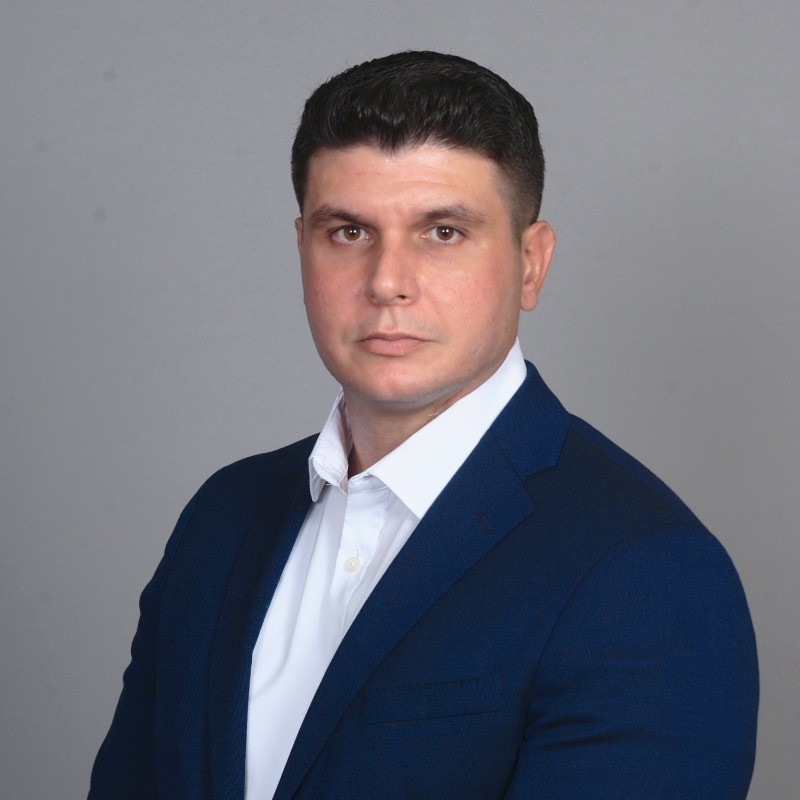
In this session, Gerry Pinero, Managing Director at Vanto Group, challenges a common assumption: that effective leadership depends on having a reasonably certain future to plan against. Instead, he offers a different access: the future is never certain, and leadership begins when we stop treating uncertainty as a temporary interruption and start relating to it as the ground on which we lead.
Gerry introduces three practical leadership distinctions:
First, leaders need a place to stand: an identity and commitment that remain steady when pressure arrives. When circumstances shift, a leader grounded in a place to stand does not ask, “Should I still do what I said mattered?” They ask, “How do I do this now, given what is actually happening?”
Second, leaders must listen for how situations occur for their people. Performance is rarely shaped by facts alone. It is shaped by how those facts are experienced by employees, teams, customers, and leaders. For HR professionals, this is a powerful opening: the people function can help executives understand not only what is happening, but how it is landing across the organization.
Third, Gerry invites leaders to operate forward from the future. Rather than extrapolating from the past or setting incremental goals, leaders can create a future powerful enough to organize action, alignment, metrics, projects, and accountability. This is not inspirational language for a town hall; it is a strategic discipline that can unlock breakthrough performance.
For HR leaders looking to become stronger strategic partners, this conversation offers a compelling reframing: your greatest contribution may be helping the organization create alignment, alter unproductive conversations, and mobilize people around a future that is possible, even when it is not predictable.
Key Takeaways
- Leaders do not need certainty to lead effectively
- Uncertainty is not an interruption; it is the environment leaders must operate within
- A clear “place to stand” helps leaders act consistently under pressure
- Transparency matters most when communication becomes difficult
- Teams are shaped not only by facts, but by how those facts occur to them
- Leaders can shift performance by creating conversations that alter how situations occur
- Breakthrough results come from creating a future, not simply predicting from the past
- Strategic plans are strongest when metrics, projects, and accountability are connected to a created future
- Real alignment requires co-creation, not top-down direction
- HR can play a strategic role by helping leaders listen, align people, and mobilize action
Final Thoughts
For HR professionals, this session is a reminder that the people function is central to how organizations navigate uncertainty. When leaders learn to listen differently, communicate from commitment, and align people around a future worth creating, uncertainty becomes less of a threat and more of an opening for transformation. Vanto Group’s work helps leaders and teams uncover the conversations, assumptions, and breakdowns that limit performance — and create new pathways to results that were not predictable from the past.
Program FAQs
1. Why is uncertainty such a major leadership challenge today?
Because leaders often assume they need a predictable future to plan effectively.
2. What does Vanto Group suggest instead of trying to eliminate uncertainty?
Leaders can learn to operate powerfully within uncertainty rather than waiting for it to disappear.
3. What is a “place to stand”?
A clear leadership identity or commitment that guides action when circumstances become difficult.
4. How is a “place to stand” different from taking a stand?
A stand is a position; a place to stand is the deeper ground from which consistent action is taken.
5. Why do teams respond differently to the same facts?
Performance is shaped not only by what is happening, but by how the situation occurs to people.
6. How can leaders shift how challenges occur to their teams?
By listening carefully and creating conversations that alter people’s relationship to the situation.
7. What does it mean to lead “forward from the future”?
It means creating a future that guides action, rather than simply predicting from past trends.
8. Why is alignment critical during change?
People are more likely to stay committed when they helped create the future they are working toward.
9. What role can HR play in uncertain times?
HR can help leaders understand how change is landing with people and shape conversations that build alignment.
10. What is the first step toward leading more effectively in uncertainty?
Stop treating uncertainty as an interruption and begin leading from it as the reality of the environment.
All right, everyone. Welcome. Welcome to today's program with Achieve Engagement. My name is Zach Doms, your community leader and president of Achieve Engagement. And as your community leader, I first wanted to say thank you for taking some time out of your busy schedules to join us today to sharpen your craft, to level up your own leadership, to continue building a better world of work. And that's so much of what we're about at Achieve Engagement. We want to help expose you to new frameworks, new strategies, new philosophies within the world of work that help rethink the ways that we approach these things, so that we can build better workforces, more collaborative workforce, more productive and impactful workforces, whatever culture and context you might be in. Maybe you're thinking about this for yourself, for your team, maybe a certain relationship. Maybe you're thinking about this as for the entire company. I invite you to step into that context, and let's have an awesome learning experience today. So I already see all of you engaging in the chat. If you haven't already, I'd love to see what type of footprint we have going on. I know we always have people all over the world, and I think one of the more powerful aspects of these programs is the social learning experience, that peer-to-peer learning behavior and interaction we can have when we're together in these instances. I think it's a very lucky opportunity to have that. Yes, we bring in researchers, subject matter experts, thought leaders, practitioners, people in the field doing this work, and they're going to bring some awesome content and expertise and insight. And I'm excited for today's program. But there's also so much learning that we can have with each other. So as we're going through this today, I really invite you to step into that. Share your own experiences, share what you've done in your workplace. Maybe there's certain resources you've leveraged before. Let's learn how you've done that when we unpack this topic. And then on the other end, you get access to these peers. We get access to an incredible expert today. Ask questions, put your own scenarios in the chat or the Q&A, and this can almost be like some free executive coaching and strategy for you today. But we need you to feed what you're dealing with. So I invite you, if you're dealing with something specific and you want some feedback and perspective on it, put that in the Q&A, put that in the chat. We're going to have time to unpack these things together. And, yeah, you could walk away with a breakthrough today just from this one-hour session. So that being said, let's see what we got going on. See Jim in Rockford, Alex in Houston, Karen, Seattle. We got New York, Churchill, Tennessee, Kayla in Atlanta. We're actually going to be in Atlanta on June 5th, Friday, June 5th. Super excited for a program to host there. So I'll share that info with you, Kayla, and anyone else that wants to go to Atlanta. What else do we have? Seattle in the house. Madeline, my friend in Colorado. Heck yeah, good to see you in here. Sierra Vista, Arizona. London, Ontario, Jacksonville, San Diego. Jennifer, see you in St. Louis. This is awesome. We got some more California, Nashville. Okay. As we get into this topic, leadership in the absence of certainty. I've been actually really trying to navigate this myself, and I'd be curious for some of you where you maybe measure yourself in comfort with this, because I feel like in the past, so much of our strategic planning and the way we operated in the world and what we did within our teams and companies was under this predicting control model. We wanted to predict the future, and then we could attack it and formulate our strategies. But unfortunately, things are just so chaotic and ever-changing and new pressures, new innovations, new technologies, and there's so much uncertainty where it's like you can't really operate under that model anymore. No one has a crystal ball to begin with, and we definitely don't have it now. So it's like, okay, how do I lead? How do you be a strong leader when there's so much uncertainty in the world and within these situations? And I'd be curious for you all, just maybe measure yourself for a second. I just want to get a temperature check for our community or who's in the room, and there's no shame in the game. If you score low, that's okay. This is just a benchmark to understand where we are. But maybe think on a scale of 0 to 10, where's your comfort level of operating in uncertainty? So thinking like, okay, zero, if things are uncertain, I crash, I burn, I can't even move. Where 10 being is like, I love it. I am fine. I live in a world of uncertainty. I thrive in it. I'm just curious, where do you feel like you land in that range? Or maybe even think of your company. Does your company deal with that well, or is it anxious, stressed? They're panicking because of all the uncertainty. Is that where you are? And that's probably a two or a three. Or are you like, "No, we love it. We're thriving. It actually energizes us." Where's your comfort level with that? I'd love to see what we got here. Okay. We got some high scores here. This is awesome. You all are learners. You're coming to programs like this. It might be a little biased of a benchmark, but I see a lot of sevens and eights. Carol, "My company's a two." Okay, I totally get that. David, 10. That's awesome. We got a bunch of sixes, okay. Yeah, Allison, "Pretty used to it at this point, seven or eight." Okay. Yeah, Madeline. Jennifer's coming in hot. "I'm an eight, but know many employees that are a three." Yeah, and I probably imagine that resonates for a lot of you, where you, as a learner, being in programs like this and communities like Achieve Engagement, you've crafted maybe the comfort and the awareness to operate in this space, but maybe your team doesn't have thatMaybe the organization doesn't have that as a part of their culture. So I'd be curious, let's unpack that maybe today. How do we lead a company, not just ourselves, but a company and a team in the absence of certainty? So that being said, let's get to the fun part where I mute and we welcome our expert today. I feel very lucky to welcome this group. Been so impressed with the work that they're doing, Vanto Group. Let's give them a shout-out for being here and serving our audience and bringing their expertise to our community today. And let's welcome Jerry up to the stage. He's a managing director of Vanto Group. Luckily, we have him because I don't know where to begin with this topic. So I'm going to lean on you, Jerry, today to lead us on how to lead in the absence of certainty. And again, everyone, I'm here with you as a learner. Ask your questions, put them in the chat as we go through this. But let me stop sharing and welcome you up here, Jerry. It's good to see you. I appreciate you doing this with our network. And, I'll pass it over to you, my man, and the floor is all yours. Thank you, Seth. Thank you for the warm introduction, and welcome everyone to Leadership in the Absence of Certainty. So I wanted to start today's conversation by doing something a bit unorthodox. Let's take 10 seconds to acknowledge what you might be walking in with, and that could be anything from pressures due to major implementations not going well, cost issues, market and geopolitical issues. Fundamentally, any forces shaping how you decide, how you allocate your time and resources, and fundamentally how you execute. So let's take 10 seconds in silence to do that. Okay, good. So first, let me start by creating what I'm committed to out of this session. I'm committed that you live with a new access to leading when the conditions you're operating in will not stand still long enough to be made certain or predictable. What this conversation is not going to be are tips or any framework that you have to memorize. This will be a discovery conversation that you can begin practicing the moment we're done with this call. Also, this conversation may occur as leadership as maybe managing others, but I want to ensure that you can use what we are going to create today on any expression of leadership, which includes projects or anything else that you're committed to cause. So instead of delivering on the outcome, at the end of the call, we're going to have time to interact with questions. So please, as questions show up, make sure that you capture them so we could address them towards the ending of the call. So a brief introduction on who I am and who Vanto Group is. My name is Jerry Pinheiro. I'm the managing director of Vanto Group, and I've been with the organization for 11 years now. And Vanto Group is a boutique global consulting firm that has been in business for over 30 years. We work with organizations to produce results that are currently not predictable, and we do this through a structured set of conversations that uncover what is actually in the way of individuals and teams operating as a high-performance team. We have worked with organizations from Fortune 100s to startups in most places around the world. And in many of those engagements, what they had in common is that leaders, just like yourselves, were dealing with uncertainty, whether that was driven by market or by things that were happening inside of the organization. So I'm going to begin today's conversation by potentially challenging some assumptions that you might hold so dear that they occurred as facts, like this is how life is. So please, if you have any questions, make sure you write them down because I would love to interact with them at the ending of this conversation. Okay, so through our work, we have discovered that a significant amount of leadership advice today is built on predictive elements, things like trends, things like patterns, which has created a fundamental assumption. And the assumption is that good leadership requires reasonably certain future to plan against. I'm going to repeat that one more time. The assumption is that good leadership requires a reasonably certain future to plan against, which is exactly where the challenge emerges. And it emerges because the only certainty the future provides is that it is uncertain, and the future changes so rapidly and so often that it often leaves the leaders with experience of either being stuck or maybe constantly changing directions to catch up with what's going on, among many other ways of operating, which I'm sure I don't have to tell you all is a problem. And it's a problem because typically performance suffers, direction gets blurred, and fundamentally the team senses it. Therefore, as a possibility, take the case that the problem is not certainty. The problem is the unexamined assumption that certainty is what you need to be an effective leader.So today we're going to put that conversation on the table, and I'm going to offer three different accesses to support you all in interacting with it. And the three accesses are going to be, first, a place to stand. Second, being at the source of how situations occur for others. And lastly, it's a term we call forward from the future. So I'll jump right into the first axis, which is when leaders feel uncertain, what they're usually missing is not information, it is a place to stand. And when I say a place to stand, I refer to almost like the ground from which they can take action. So let me further explain what I mean. A place to stand is not the same thing as taking a stand. A stand is a position that you declare. A place to stand is the ground in which that stand is taken from. So fundamentally, something prior to it. It's deeper. So stands argue with the circumstances. A place to stand doesn't argue. It simply remains, and the actions follow from it. And here's why that distinction matters. So I'm going to start by providing a quick example, and you could all see if it sounds familiar. A leader says, "I stand for transparent communication with my team." Okay. For a few weeks, they live it. They share context. They admit what they don't know. They invite the hard questions. But then all of a sudden, pressure arrives out of nowhere. A board member calls demanding answers to something. A key engineer threatens to quit. The boss calls saying, "You need to manage the message about upcoming layoffs." Now all of a sudden, transparency has a cost. And without a place to stand, here's what almost always happens. And by the way, it doesn't happen in a dramatic way or anything like that. It happens quietly. The leader begins to think some things are just confidential. They rationalize it. The team isn't ready for this information just yet. Sharing now will just create more panic, and it will be chaos for the team. I'll tell them when the timing is right. So six months later, the leader still believes that they are standing for transparent communication, but her team have learned to read between the lines, and now there's less trust. The stand didn't get abandoned, it's just dissolved, one reasonable-sounding compromise at a time. So check it out if that sounds familiar. So now imagine that the same leader is operating from a place to stand. And it might sound like this. "I am someone whose word creates reality for my team. When I'm not being straight with them, I'm not who I say I am." So the pressure still arrives. The board member still calls. The layoffs are still looming. But the question is no longer, should I be transparent here? Now the question transforms into, how can I be transparent here? So it went from should to how. The stand doesn't need to be defended because it isn't floating. It is anchored to who the person declares themselves to be. That is the move. A stand is a position you take, but a place to stand is an identity from which the stand is unshakable. So you might have the question, well, how do I build one? A place to stand is built on clear and direct relationship with what's so. So what do we mean by what's so? What's so is reality. It's without any added meaning, without any spins, without any story you wish were true. And here's where this connects directly to the topic of today. The most fundamental thing that it's so, the thing that leaders most want to argue with and most need to stop arguing with, is that the operating environment of your organization has always been, and would always be fundamentally uncertain. Not by a little bit, but completely uncertain. Normally we live lives inside the comfortable illusion of certainty and treat uncertainty as if it was an interruption, something to manage around until things settle down. Things never settle down. As long as you relate to uncertainty as an interruption, you are at the effect of every single disruption that shows upThe shift is when you grant being to the fact that uncertainty, it's not an interruption, but the ground itself. You stop trying to make uncertain things certain, and you become free to lead inside of it. There's now actually something you can be certain of, and that is that life is uncertain and everything else is an illusion. That is the first place to stand. And before I move on to the second axis, I know that this conversation could have you thinking, "Well, how do I apply this? Would it make a difference in my particular circumstances?" And many other things might be there for you out of what we just went through. So to support that, we're going to be hosting a master class on May 28th for up to 20 people, in which we're going to request that you come with your leadership and business challenges in which you can imagine if something alters, breakthrough results will for sure emerge. And at the end of this session, we will provide more details on how to register for those things. We're also trying to keep that session really small because we want to ensure that it's an interactive session, that you could bring your real on-the-core challenges so that we could explore them together. So now I'm going to move to the second axis. And the second axis is now that you have a place to stand, which is grounded on what's so, let's now take a deeper dive into the world of what is so, into the world of facts. And that world has two layers to it, and most leaders tend to operate from the wrong one. There is what is objectively the facts, and there's what's so experientially, how those facts are occurring for you, for your team, or for your customers. That includes things like your mental state, your emotions, your sensations, your thoughts, your memories, things that feel like real experiences. The interesting thing here is that performance, your own and your team's, is often and most of the time not driven by what is objectively so, but rather it's driven by how situations occur. So to test that theory, we're going to do a mini exercise, and you're going to do it on your own, which is take one minute and pick one matter that's currently on your plate that you're dealing with that is an obstacle. Write it down as a sentence using the word 'is.' For example, the market is unpredictable. My team is resilient. The board is impatient, whatever that might be. So take one minute and please do that exercise. I'm going to be setting up my timer. Some of you are going to have a little bit more time since I stumbled in setting up my timer. Okay. So now replace the word 'is' in the sentences that you wrote with 'occurs as,' and read it again. And take another minute to explore what changed, what is different, what all of a sudden became available by changing those words. And let's do another minute.Okay, very good. Fundamentally, our job as leaders is not to fix the is. Our job is to listen, carefully listen, for how the situation is occurring for the people that we lead, and create the conversations that alter their occurring. That is the use of language most leaders have never been trained in. So I'll say that one more time. Our job is to listen for how situations are occurring for the people that we lead, for the people that we work with, and create conversations that alter the occurring. And then the third and most important axis, this is where things get real practical, is that there's two ways human beings relate to the future. One of them is the default way, which is based on prediction, extrapolating forward from the past, from current trends, and from what is likely. This is fundamentally what Sek was creating at the beginning of the conversation. But again, as he said, in an environment defined by ambiguity and things that are rapidly changing, the future is mostly a forecast of what you fear. It pulls people into reactions, into hedging, and into betting. There's another relationship to the future that often goes unexplored, and it is one that is available to every single leader. The future being something that you create in language that you and your team operate from. So often when I say that sentence, people think of, oh, creating a vision or maybe something like a pie in the sky sort of a sentence, and that's not what I mean at all. This is a future that's actionable. This is a future that it's created and aligned on every single action the organization takes, and it wouldn't be present otherwise. When you create a future that's powerful enough to be larger than the rapid changes coming at your team, to you and your team, the changes stop being threats and start being conditions of the game that now you interact with. Leading when nothing feels certain, it's nothing more than a combination of a place to stand on the fact that uncertainty is the ground, listening and altering how situations occur, and creating, declaring, and operating from a future that is not predictable, but it is possible, and that's fundamentally the axis. So I'm going to stop here, and I want to hear questions from you all so that we could interact with what's there for you. All right. I'm coming back up here with you, Jerry. That was incredible reframing and kind of discussion so far, and my head's already spinning like, okay, how do I create this vision that is not necessarily predictable but is possible, right, and what that means. We had a couple questions. And for those of you that kind of gone through this practice already, I'd be curious what's coming up for you, and feel free to post your questions in the chat. And Madeline asked, when you're going through that kind of the first assumption of how good leadership requires a certain future to plan against, and talking about a stance or a place to stand, she was kind of wondering, would you say this is similar to having a strong personal value? Is that a values system that you can create? Or- Oh ... is that kind of not necessarily connected to that? It's not necessarily connected to it. And I'm always interested by those type of questions because even the word value has an inherent assumption that might depend on what a person perceives as a value. The unique quality that a place to stand has is that it's a creative phenomenon. It fundamentally is a declaration as you declare you are that type of a person. I declare to be someone that does X. I declare someone to be that does Y. I declare myself to be a certain way. That often gets confused with values, but the fundamental thing here is that there's nothing fixed. We are at the source of what we want to accomplish. We are at the source of the results we want to accomplish. And taking a stand versus creating that, it's a very powerful axis to begin to discover that. Yeah. We got another good follow-up question that kind of builds off of that. Mm-hmm. And I think this is probably also aligned to kind of the closing thoughts of the axis that you provided about how the future is something you create, that you operate from. Mm-hmm. And the question, I guess, is how do you lead strategic change regardless of the change you have in front of you? Ooh, so that's a really good one. So again, I'm going to respond in a general way, because one of the things that I've also discovered is that every organization is unique, every situation is unique, and it's hard to specifically answer those things without a lot of context. So I'll first provide that disclaimer. And if we make two assumptions, the two assumptions being things from the past often create the directioning where you're going versus this is a future I'm creating that I've created as a matter of a couple things. The first one is it's done in alignment with everyone that's at the source of delivering on it. Then the second thing is, is it predictable? When you take a look at those two... Actually, I think it might be better to do it through an example. We recently had a client who's a large steel producer, specialty steel producer in the United States, and fundamentally, they were divided into two worlds. One is management and the other one is unions. And they've been trying to create a future to operate inside of without any success, to the point that they were about to, union was going to go in strike, the plant was going to close. It had a bunch of financial and physical implications. So they give us a call and we were facilitating a session for them, and one of the things that we noticed that was missing right away, again, these are challenges that each one were facing, challenges in addressing something. We created a future that was bigger than those challenges. And how did that look like? That plant was the only employment source in over 100 miles to where it was located. Most people that worked there lived close by, and if that plant closed, fundamentally the livelihood of those people that worked there would disappear. So was it in everyone's best interest for the plant to shut down? Absolutely not. If they went on a strike, would that have impact on financial implications, potentially damaging the company, potentially leading to shutdowns? Yes. So the future was, if we don't learn, if we don't work together and put our differences aside and create something that's bigger than ourselves, this is bad for all of us. So let's start listening to one another in a way that we could create something unique. Mm-hmm. That, by the way, that was co-created by them. It had nothing to do with us. It's something that when management exposed their point of view in an environment that union was listening to and vice versa, they were able to articulate a future that transcended anything else that was there before. Because it had something at stake, it had something that they wanted to accomplish, and it wasn't given by the past because predictably, they were going to continue bumping heads. Predictably, they were going to close down, and predictably, everyone that worked there would be unemployed. So that's sort of how it looks like on the court. It reminds me of something that we do a lot with achieve engagement is we kind of review and talk about people's strategic plans and their initiatives for the people function and the culture and the workforce. And this is sounds, it's a lot bigger than goal setting, right? That we're talking about. Right. But it reminds me about how when I do look at certain ways people set their strategic plans and goals, either I feel like there's no goals and they're just very project and task heavy, like we're just going to be doing these things, that's the plan. Or they're incremental and small goals where any one of these projects could probably achieve it, but they're setting like, "Oh, we just want to improve engagement or performance by a couple percentage points." And it doesn't really force them to think at that level that might unlock the actual breakthrough in many ways. So that's really good. Because even that, that you pointed to, it's all driven by the past. Mm-hmm. So fundamentally is we follow this trend. We know that we've been growing at 10%, so growing at 15% will be a breakthrough. That's often what it devolves into, as an example. Which is distinct from saying, "I'm a company that's $10 million," to say something. "I want to be $100 million in five years. Where do I have to be in 2027 for that to be a fact?" Mm-hmm. And you might confront, "There's nothing I've ever done or nothing that's predictable that will get me there." Let's look at that problem together. All of the sudden, you're looking from a lens of nothing that's predictable. The reality is that after you do that exercise, you might say, "Oof, 100 might have been way too ambitious. We looked and we couldn't find anything. Maybe 70." But 99.99999% of the time, because I don't like absolutes, what you're going to be left with is much better than what you originally were creating from a predictive perspective. Not only is it ambitious, because here's the... A lot of people confuse the future with something you just create and don't manage.Here's how the future gets delivered. You create the future. You create metrics and measures that are a match to the delivery of that future. You create projects that summed up are a match to those metrics and measures that will deliver that future. Everything is connected. It fundamentally becomes a strategic plan guided by a future, not by the past. But most of the time, the future gets hidden under a function of a vision that never really makes any difference other than a board meeting that you might put it as part of the presentation because it looks good. Which I think that's a really important follow-up to that vision piece is you do have to then start building the conditions and the operations to create it, right? Usually, I feel like it's more town hall culture stuff. Let's roll out an inspirational vision at the town hall. Let's get people fired up. And then next week, we'll continue operating the way we were operating last year. We're not actually working from that future. Yeah. It's funny when you mention that example as I've seen that happen in many town halls, and then someone always asks the questions, "Well, how are we going to deliver on that?" And then all of a sudden, it's like, "We have a plan. We have things and stuff that we're going to do." But in reality, it's just continuing to do the same projects that were already there. Mm-hmm. So that alone already points to a disconnect. And again, what a lot of leaders often confront in doing that work is they put the future as something that doesn't produce tangible results. And it's a much longer conversation as to why that's the case, but the future is the one thing we've known produces results, well, we call them breakthrough results, because they always, 100% of the time, exceed anything that was predictable. Just that shift in perspective. I just want to share this in the chat for all of you, too. I see some other questions coming in, so we're going to jump into these. But if you've realized you just got a taste of this discussion and you want to unpack it a little bit more specifically for your context and your situation, as we talked about before and Jerry mentioned, we're actually hosting a part two to this. Really intimate, we're capping it at 20 people, master class style, where we can actually talk through as a group, peer-to-peer style, but also with Jerry facilitating and coaching on this around situations that you're facing. So definitely invite you. I just put the chat in there. Just click the button, fill out the form, and we'll tag you in as that raising your hand to join. So, okay, I got an awesome question here from Karen, and it really builds off of what I just asked. We have the vision. Okay, now we want to start creating the conditions and actually operating from that future. But what happens when it gets hard, right? How do we keep ourselves from falling into the bad habits of the past when we're trying to change into this new way of thinking? Because I think it's really easy to kind of operate from that place when things are good or when you're kind of in that space, but when you actually start to work and things get hard or challenges face you, that tends to pressure us back into our old ways and our old habits. So, yeah, to Karen's question, what are some of the ways that we can keep ourselves from falling into those bad habits when we're trying to bring to life this new way of thinking and leading as a company? There's several ways, and they really do depend on the dynamic of the team. Some of them, as I create them here, I think the pitfall would be to discard them as, "Oh, this is something we do." It might be something you do. It might be something how you manage projects. But if they're disappearing, the first question to confront is there's something that's the genesis that allows for that to disappear. And being at the source of it is the first step in creating a solution for it. So now I'm going to say a couple of the most common ones we see, and it might not necessarily apply to this particular case. One thing that we see is alignment. Often enough, you see that this future is created by one person, usually a high-level executive, and it's not aligned on with anybody. So then if you ask the people who are actually in charge of delivering on that vision, if you ask over coffee or something, "Hey, why deliver on that? Is that exciting for you?" They're like, "Not really. It's just what Seth came up with. I don't see-- He's going to change it next month anyways." So there's this fundamental aspect of there was no alignment when it got created. Part of what we see- Oh, keep going. Sorry ... yeah, part of what we see is creating something together is pivotal and foundational to maintain the alignment and to maintain the movement. When Seth wakes up and he says, "Hey, we want to change this." If Jerry and Seth co-created it together, Jerry's holding Seth accountable because, A, that future was exciting. You're changing stuff now again. Is that a match? So now we're having an actual conversation because I'm committed to that thing we created. I'm enrolled in that. But if Seth created it for himself, and I'm just following him, there was no team present. There was no alignment present. There was no coordination present.And if you ask me what is the biggest and most common pitfall that has people go back to their ways of operating, it's that whatever was created was not done in alignment, or at least not with the people that it needed to be aligned on. And you didn't enroll anybody in it either. Yeah. It's like if some of these type of things that we're talking about are coming out of the blue, and all of a sudden it's a mandate in some cases, it's like I could see how you're not going to get that collective movement towards the vision that you really need and are looking for. And- And the other thing that I-- And I'm sorry to cut you off, Seth. Okay. It just came up for me right away. The second axis, which was how things occur. Whenever you're creating something new from the future, you have to be responsible, and you have to look as a leader how it occurs for everybody else. Silly examples. Seth comes to Jerry and say, "We're going to turn this 500K company into a $300 million company in two months." "That's great, Seth. How the hell am I going to do that?" "Well, we're just going to have to work harder, but I have X and I have Y." One, I wasn't enrolled, and two, Seth is not being responsible for how the world is occurring for every other person, especially the ones critical for making it happen. What leaders often underrate drastically is that the only real lever that they have to alter anything is the people they work with. They could have been an expert on something, and that's fine. There's some instances in where being an expert in something, it's great. But usually when growth, expansion, everything else is in play, your only real access is other people. So alignment, being responsible for how the world occurs for them, and speaking into that occurrence in a way that they continue to say, "I'm excited to do this. I'm energized to do this. I'm going to give Seth my best. I'm being innovative." All of that is a function of how Seth leads from how the world occurs for others. I think one thing, for all of you listening in our community, especially on the HR people leader front, I hope in many ways that excites you as a leader because you get the opportunity to help guide the people strategy and how these things occur and really step up. Again, we're always talking about how do we continue to be a stronger strategic partner to the business? How do I get a seat at the table? How do I get other executives to buy into my role and what we do within the people function? And I think Jerry just pointed it out, like one of the most undervalued sometimes or things within all of this is taking in account for how these things actually occur, and that's something the people functions should be an expert in, right, within your company. You should be an expert on how you people are occurring and operating within the business and helping guide that. So hopefully that excites some of you to be like, "Oh, I get an opportunity to really step up, and this is how I fit within the strategic team when they're coming up and trying to roll out these future visions for us." You know, Seth, as you were creating that, something else that was there is what about if I'm someone that I'm not a leader, I'm responsible for an area, and I think that my leadership team has a lot of holes in the cheese that I could contribute to. I have all the right answers, but I don't have an access because I'm just here doing this very critical, yet I'm disconnected from the totality of it. I don't manage anyone. I'm just here in my accountability. That's probably the most common question we get, and here's the answer for that. Let's take on the assumption that everyone is looking to be successful in one way, shape, or form. What they often say when someone comes with the next best idea is they don't quite understand everything that we're dealing with, so they tend to be dismissive. So what about if we altered the paradigm around? Let's say that I report to Seth, and Seth has been hiring people, and they don't last two months and whatever. Something. And I came up to Seth and I said, "Seth, look, first I want you to get what I'm committed to. I'm committed for you and this company to be wildly successful. Start by establishing what my commitment is. And I noticed that something is not quite working well, so I wanted to listen from you. What do you see missing? How can I support? How can I be an asset? Tell me what you're dealing with so that we could look at things together." Hmm. I've never heard of an instance where Seth would be, "Get out of my office." Most of the time, they're like, "Thank you for your partnership. This is what I'm dealing with." What that exchange does, being curious and interested, standing in the commitment, what that exchange does is it creates for the other person that they're not being judged and evaluated. Remember, it doesn't matter whether it's boss or it doesn't matter the-- We're all human beings at the end of the day.The person doesn't get defensive. They're not being judged and evaluated. If anything, there's a closeness that happens that allows the person to actually... You become a strategic partner. And never underestimate the influence that a strategic partner has in altering everything in an organization. Now, what typically happens, "Hey, Sek, I don't think you know what the hell you're doing, man. This is how you're supposed to be doing X, Y, and Z." "Get out of my office." Or Polali said, "No, I got it. Thank you very much." They write it down. They don't do anything with it. Yeah. I've seen that story a lot. And as leaders, you're excited about these things. You want to take the organization and even your own career into the next level, and it's like, yeah, I could totally see how if you're someone that's reporting up like that and forming that type of relationship, that person is going to become your biggest ally and partner and advocate in the future. That's an incredible way to approach that. And- All of the sudden, Sek is coming up to me and saying, "Jerry, what do you think about that? This is in your area. What's your..." The barrier disappeared. Now there's a stream of communication that's solid. It's founded on partnership, and that goes a really long way. Yeah. Another great question that came in, and I'm curious if you mean like as a facilitator or just in general, like restructuring the team, but should you get outsiders to join the discussion to get a new or fresh perspective? And I wonder if there's two versions of this. One, I could see that's the value of Vanto Group- Mm-hmm ... like one bringing an external group to help pull the group out of their current situation into this new kind of mode of thinking as a facilitator, moderator, mediator, all those different things. So I see the value immediately for that. But I'm thinking even maybe, let's say I'm an executive on a team and I'm trying to bring to life this new thinking, and my other executives aren't really going there with me. Do I need to bring in someone new that's going to bring that type of creativity to the group? Or, yeah, I guess what's your thoughts on how people should think about that? Again, I go back to, I don't like dwelling too much in the absolute, especially with businesses. Because again, if we take the stand that every single human being is unique and organizations are made up of many human beings, not two organizations are ever going to be the same. Each one is its unique fingerprint. But with that, some general approaches. It's funny, I got distracted by some of the messages on the chat that were coming up. So Sek, ask me that question again. Okay. So when thinking about... Let me scroll it up. Where did it go? Okay. Should you get outsiders to join the discussion to get a new or fresh- Yeah ... perspective? Yeah. So the answer is, it depends. Here's what I personally believe. The people who are going to do, and let's take two approaches, outsiders as consultants and outsiders as new team members that are joined in permanently. Let's take both. If they are joining permanently, I think in certain conversations that adds a lot of value. It adds a fresh perspective. Now, it also depends on the complexity of the business. It also depends on the uniqueness of the difference. Some outsiders might not have sufficient background to contribute to the conversation, in a way that is being listened to as a contribution. So that has pros and cons. But in a very creative environment, that could also be a huge asset, especially if the skillsets are already there. So it really does depend. And from an outsider, Vanto Group fundamentally manages and listens uniquely to conversations. So why is that value add? Often enough, if, again, conversations are like air, they're this invisible phenomenon that even more so each person has assumptions of what things mean. For example, I was talking to a coworker of mine, and he's like, "Oh, that company often works in silos." What do they mean by silos? Nobody asked that question. Everybody assumes they know what a silo looks like. What does silos look like for that organization? Describe a silo for me. It turns out that there were no silos. It was just the experience of people having a unique perspective. I'm like, "Wow, that's really far away from silos." But what came out was silos. So comes out silos, person is now listening for that, they interpret what a silo is, and all of a sudden they're in action solving something that doesn't exist. That's the power of a conversation. It's one of the few things that actually creates reality, and we're not present to it. Words, sentences, expressions, they create worlds that gets people into action, and often enough, we don't relate to it that way. So bringing an outsider to listen uniquely, interject with things that might seem obvious, assumptions, pitfallsI consider it always extremely valuable depending on the seniority of the team. It's also one of the only unique accesses that I've seen to really interact when the symptoms show up. Symptoms is, "Oh, we're losing revenue. Oh, our turnover rate is really high. Oh, I don't know what's going on. We're working harder than ever, and the results are not trickling through." That's the expression of, "I have a headache. I took a Tylenol, and the headache came back." Mm-hmm. You know you have a headache, you don't know what's at the source of it. So it's a similar analogy. So I think bringing an outsider in those circumstances is extremely valuable. It really makes me think of how valuable these type of conversations will continue to become in the modern and future workforce, where I find that most conversations are being more automated. People are leveraging even AI and technology to build their communications. They're not even having them anymore, right? There's always been a trend of less meetings. Let's not have any meetings anymore. I get it. There's pros. There's values to it. But I just think about the way that communication and connection has continuously become, I don't know, just less intentional and more automated in some cases, how important it is as an organization to create more intentional conversations like this. Oof. I could go down that rabbit hole for a while, but I also know that we have two minutes left. Yeah. And I wanted to leave everybody with a quote. So, Seth, let me know if there's anything else to manage before I leave everyone with a quote. I'll just close out with one more reminder to you all. Would love for you to join us in a couple of weeks. At the end of this month, we're doing a follow-up master class. Again, free to join, but we really thought this was such a really important topic for our community, and we wanted to provide some space for our members to actually unpack this peer-to-peer style. So the link's there. But yeah, Jerry, bring us home with a quote. And the quote is the following. This was a quote from Werner Erhard, and he said, "You and I possess within ourselves, at every moment of our lives, under all circumstances, the power to transform the quality of our lives. Don't be at the expense of uncertainty. Thrive in it." Mm. And with that said, thank you all for your listening. It's been an absolute pleasure, and I'm looking forward to seeing you all in the master class. Yes. Everyone, let's show our appreciation for Jerry for bringing that wisdom to our network. Would love to see you all in a couple of weeks. Appreciate all of you taking some time out of your busy schedules to continue to learn and sharpen your crafts here. It means the world to us that we're all kind of leading this charge in the larger world of work. So thank you, everyone. Have a great day, and we'll see you at the next one. Thanks, everyone.


.jpg)
.jpg)