The New State of Work: 5 Defining Challenges of 2026
The New State of Work: 5 Defining Challenges of 2026
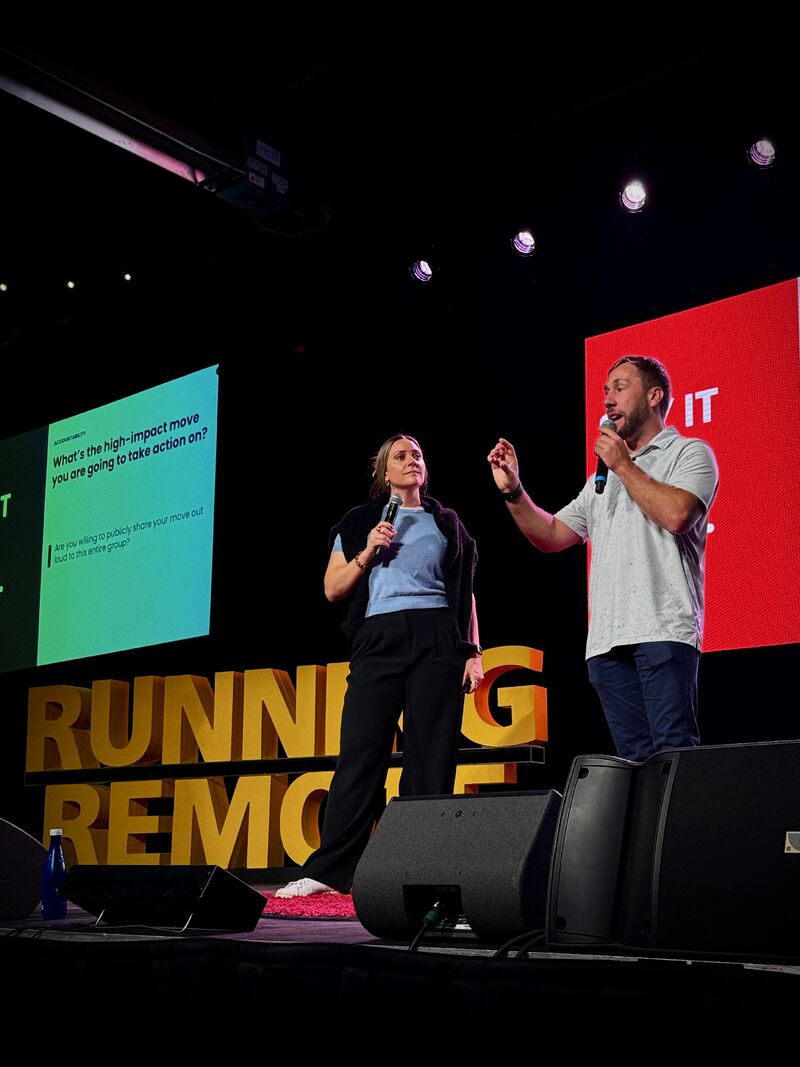
The world of work is evolving faster than ever, forcing organizations to navigate unprecedented levels of complexity and change. In this forward-looking session, workplace experts explore the five defining challenges shaping the employee experience in 2026—from artificial intelligence and workforce transformation to employee well-being, leadership expectations, and evolving workplace models. Drawing on emerging research, market trends, and real-world examples, the conversation examines how organizations can adapt their people strategies to meet the demands of a rapidly changing environment. The session emphasizes that success in 2026 will depend on leaders’ ability to balance technological advancement with human-centered practices.
Session Recap
The session opens by acknowledging that organizations are facing a convergence of challenges unlike any seen before. Economic uncertainty, technological disruption, shifting employee expectations, and changing workplace dynamics are forcing leaders to rethink how work gets done.
Speakers identify five major trends that will define the state of work in 2026.
The first challenge is navigating the impact of AI and automation. While organizations are rapidly adopting generative AI and intelligent technologies, many are struggling to define clear governance models, upskill employees, and integrate AI into workflows in ways that enhance rather than replace human capabilities.
The second challenge is addressing workforce well-being and burnout. Employees continue to face increasing workloads, constant change, and growing expectations around productivity. Organizations that fail to prioritize sustainable performance risk higher turnover, disengagement, and declining trust.
Third, leaders must adapt to new expectations around flexibility and workplace experience. Hybrid work has evolved beyond location preferences into broader conversations about autonomy, trust, and outcomes-based performance.
The fourth challenge centers on skills and talent development. Rapid technological advancement is accelerating skill obsolescence, making continuous learning and internal mobility essential competitive advantages.
Finally, the session explores the growing importance of leadership capability. Today's leaders must navigate ambiguity, communicate transparently, build trust, and create alignment across increasingly distributed and diverse teams.
Throughout the conversation, speakers emphasize that organizations cannot solve these challenges independently. Success requires cross-functional collaboration, data-informed decision-making, and a commitment to designing workplaces that prioritize both business performance and human needs.
The session concludes with a call for organizations to shift from reactive approaches to proactive workforce strategies that anticipate future challenges before they become crises.
Key Takeaways
- The future of work requires balancing technology with humanity.
- AI adoption must be paired with governance and upskilling.
- Employee well-being is a strategic business priority.
- Flexibility and trust shape the modern workplace experience.
- Skills development is essential for organizational resilience.
- Internal mobility helps organizations retain talent.
- Leadership expectations continue to evolve.
- Transparency and communication build trust during change.
- Organizations need proactive rather than reactive workforce strategies.
- Cross-functional collaboration is critical to navigating complexity.
Final Thoughts
The defining workplace challenges of 2026 are interconnected. Organizations cannot address AI adoption without considering skills, cannot improve performance without prioritizing well-being, and cannot navigate uncertainty without strong leadership. The future belongs to organizations that embrace change while remaining grounded in human needs. By investing in trust, adaptability, learning, and employee experience, leaders can create workplaces that are not only more resilient but also more capable of thriving in an increasingly unpredictable world.
Program FAQs
1. What are the five defining workplace challenges of 2026?
AI adoption, employee well-being, workplace flexibility, skills development, and leadership capability.
2. Why is AI such a major workplace challenge?
Organizations must balance innovation with governance, ethics, and workforce readiness.
3. How does employee well-being affect business outcomes?
Well-being influences engagement, productivity, retention, and overall organizational performance.
4. Is hybrid work still relevant in 2026?
Yes—employees increasingly expect flexibility, autonomy, and outcomes-based work environments.
5. Why is continuous learning so important?
Rapid technological change is accelerating skill obsolescence.
6. What role does internal mobility play in talent strategy?
It helps organizations retain employees and address evolving skill needs.
7. How are leadership expectations changing?
Leaders are expected to communicate transparently, build trust, and navigate uncertainty.
8. What is sustainable performance?
Achieving strong business outcomes without compromising employee well-being.
9. Why is cross-functional collaboration essential?
Complex workforce challenges require alignment across HR, finance, operations, and technology teams.
10. What is the first step organizations should take to prepare for 2026?
Assess current workforce strategies and identify gaps in skills, leadership, technology, and employee experience.
Hello, everyone. Welcome to today's program with Achieve Engagement. My name is Zach Doms. It's great to see you all in here. Super excited to continue learning, sharpening our crafts, leveling up our insights into what's going on within the world of work. Maybe learn some frameworks, some tactics that we can use to make a bigger impact, because that's what we're all about at Achieve Engagement. So thanks for coming in here today. If you haven't already, I would love just to see where we're all calling in from. I'd love to see in the chat, maybe add where you're calling in from today. And then I would be curious, as we kick this off, we're at the halfway point in the year, which adds into a really nice check-in moment for us to reassess what's going on in the world of work, how have maybe certain things changed from an employee engagement standpoint and employee expectations. And I'd be curious for you all, when you think about your experience so far this year, what are some of the maybe defining challenges of 2026 that really stood out to you? From an employee engagement, maybe a performance, maybe from a world of work perspective, what is that for you? What is one of the biggest defining challenges that you've seen really rise to the top of the agenda for your role, for maybe your career or your role internally in the organization and what's going on within the employee experience? Give me some insight into what's top of mind for you, because I'm really excited to dig into what some of the experts are seeing, what some of the research is showing, and how we can just continue to stay ahead of the curve and keep a pulse on these things so that we can make a bigger impact within our own roles. So I think that's so important. But I love what's going in here. We got people in Boston, Idaho. Heather in Columbus, go Bucks. Okay, I'll allow it. I'm from Wisconsin, so I'm a Badgers fan, but I'll allow it for this one. Lynn in Ann Arbor, good to see you in here. Illinois in the house, Central Nebraska. AI adoption as being one of the challenges. Yes, I think that's huge. Team professional development. Okay, keep adding that in there. We're going to kick this off in just a minute. One of the things, though, I saw one of you at least is in Illinois, but if anyone else is looking for a reason to fly out to Chicago, we have our next Achieve CPR live experience happening at the end of summer on August 28th. We actually just had our Atlanta program. It was incredible. We had a full room, had to cut people off. The engagement was so high. We basically spent the entire day unpacking different breakthrough strategies related to the pillars of culture, performance, and retention. So if you're interested and you weren't able to maybe join us in the room for that session, join us for the watch party next week. We're actually going to host a session where we play some of the top clips from the day, and we're going to have some of the speakers back live during the session, and we're just going to play some of the breakthrough strategies, and then we're going to unpack it more as a community. So join us next week if you are able to. That's on June 23rd. I've just put the link in there. And then we also have our live program in Chicago at the end of summer, so make sure to sign up for us then. Okay. Last thing is I'm going to play today's session. It's a little bit different format than our typical. I'm excited to learn from some of the research that Workhuman has been leading in this space. So strap in. One of the things we're going to do, though, is we want to reward you all for engaging in today's program. We want to thank you. This is so much of a social peer learning experience that makes what this community so powerful of what it is. It's the peer-to-peer learning, and I want to reward you for that. So as we go through today's program, I want you to engage in the chat. Share your own ideas, share your own takeaways or certain tactics or things that you've experienced. And I'm going to be looking at that. I'm going to take log of your names and what you shared. We're going to do a post thing on LinkedIn to share that with the greater community, but then I would love to send you a prize. Whether that's a gift card or $100 credit to our prize and swag store. You can get some awesome Achieve Engagement swag. I mean, who doesn't want that? And I would love just to be able to reward you for that co-creation that we have today. So that being said, let me transition to the session. And if you can help me too as I do this, make sure you let me know that the audio and the video and everything's coming through so that we make sure we could hear it appropriately. So give me one second. I'm going to play it right now. Here we go. And put in the chat, yes, thumbs up, or the emojis if you're able to hear everything correctly. Hi, everybody, and welcome to our session today on five defining employee challenges in 2026. I'm very excited to be joined today by George, and we are going to be sharing with you the results of the 2026 Global Barometer Report and the findings on how people are doing nowadays at work, and are they really doing as well as we think? What's going on behind the scenes? So before we dive in, just some quick introductions. I am Lynette Silva Healan, the international consulting practice leader for Workhuman, and I have the best job in the world. Every day, I get to help millions of workers feel seen, valued, appreciated for who they are as well as what they do. And I also get to play with our research team on exciting studies like this one and meet people like George, who is just as passionate and interested in research as I am. George? Thank you so much, Lynette. I am very honored. I am excited about this conversation that we've been having ongoing for months now, and so to have this conversation with you today is going to be incredible. I am the chief strategy officer with Lighthouse Research & Advisory, and so passionate, as you said, about research, data, and all things people. My heart is for people, to help champion their purpose and really bring that humanity back into the workplace that's filled with technology. So I'm excited about all this research and data that you have that combines with everything that I'm passionate about as well. Let's get into it. I'm so excited- Let's do it ... for the time. So today's time together, we're going to be unpacking a pretty big global research report we did, but I want to just underscore the central story of this report, and that's organizations, we all have infrastructure for seeing our financial reality, but almost nothing for seeing our human reality at work. As George said, as I fully believe, we need to make work more human now more than ever because it's our humans that are the real differentiator in our organization. So as we unpack this report today, we're going to be diving into the overall story, but also the five key challenges identified in the report. And then we're going to just a quick recap, takeaways for you. Guests, we will be sharing this report afterwards. We will also be sharing a QR code where you can scan and download it straight away if you like, and then we'll be taking some questions. So just before we dive in, to ground us in what did this report look at, we surveyed over 6,000 people around the world in 10 countries earlier this year. And what the barometer established was a top-line measure of belonging, trust, growth, and motivation across the global workforce. And 64 out of 100 people are doing pretty good, doing pretty well. That's great, but it doesn't tell the whole story. In fact, 72% of workers describe their organization's profitability as good or great. They see their company doing really well. But when we peel that back a bit, we see attrition numbers, and intent to leave are actually much better this year. They're 26% this year, compared to 37% intent to leave in 2023. But those numbers are hiding a lot, and that's what we're going to be diving into. And that starts us off on our first challenge of invisibility, invisible performers. And when we think about our people at work, do they feel seen? Do they feel seen for who they are and what we do? And the answer is no. So what do we mean by visibility? The report, in report terms, visibility is the measure of how much employees believe their organizations see and understand their good work. So data on the left, not really surprising. This is self-reported, so this is somewhat self-aware people are saying, "You know what? I'm an exceptional performer, and yes, I am getting recognized for good work in the last quarter a lot of the time." Versus on the other end, "You know what? I'm a fairly adequate performer, and I'm not getting a lot of recognition." And this might, on the surface, feel right. I would argue it's our adequate and our good performers where we also need to be focusing recognition. Like, "That thing you did, you did it well. Keep doing more of it." And that's how we can then not only help redirect people who think of even themselves as adequate or good performers into becoming exceptional performers. But how we can help identify top contributors, too. Before I get into that, George, I wanted to hand it over to you. Yes. I think what this story really tells us, and we're going to dive into, Lynette, is the organizations that I'm looking at that are going to win this next era of work, if you will, won't be the ones that are using the most technology, the fastest AI, has the greatest agents to support our employees. They'll be the ones that create real trust, right? Real trust. Mm-hmm. Where vulnerability is there, where accountability is for all, and not just employees. Where we create the most clarity, adaptability, and there's a human-centered performance. When I'm talking to employees in conferences and what we've always done, mentalities. Mm-hmm. But what we're seeing even more over the last couple of years, and even more so in 2026, is employees are asking deeper questions. They want to feel a sense of connection that you talked about, that sense of belonging, right? Mm-hmm. That stage of psychological safety, and those questions look like, "Do I matter here?" Yep. Not just what I'm doing for the company. Why am I doing what I'm doing? Can I trust leadership? Will AI replace me? Will AI elevate me? Is there a balance there? And so you have these conversations where you have to also understand, does this company see me, right? See the reality of my work, not just production, but the reality and the toll that it takes on mentally, emotionally- Yes ... physically, right? And then ultimately, I believe it comes down to the relationships, right? Is this relationship still working for us, right? Yes. Does this relationship we're working work for Lynette? Or is she just giving her all and going home empty and have nothing left for her family? How do you find that rhythm? Not balanced, right? There's no- Right. There's no balance ... work-life balance. What's the rhythm today? The rhythm could be fast, boom, boom, boom, boom. Sometimes it could be steady, but is it really working? These are the type of questions that are really redefining what work looks like. When we talk about the future of work as human and not AI, these are the questions that people are wanting to get into and find answers for today. Oh, I agree completely. It's like people will say, "People don't change." No, but- Yeah ... the world around them is changing very, very rapidly. Yeah. And humans as a species, we don't adapt to change quickly, Yeah ... but we need to. So how are we helping our people adapt in that space? And you've just very succinctly summarized where we're going to be going in our chat today, but it all comes back down to that visibility as that foundational element. Do you even see me? Do you even see what I do? Do I see back how what I'm doing is making a difference? Yeah. Does it matter in the organization? What kind of impact it's having. And that's where this stat on the right around only 66% of people believe that their organization can even accurately identify top contributors. Yeah. Okay, so if the people aren't all that clear that leadership understands who are the ones really delivering here, who sees? Coworkers see. Coworkers see that level of contribution of each other, and that's where this idea of we have all of these financial tools to understand how we're doing financially as a business. Mm-hmm. Where are the tools to help us see how our people are doing and how- Yeah ... our people are feeling? Yeah, I think there's a balance there when you talk about what it looks like. I was an invisible employee, right? Believe it or not, Lynette, I was very introverted. There's a part of George that's an introvert- Me too ... right? And so as much as I'm excited about speaking and I'm passionate, I love when I'm at an event, and I get to talk to people face-to-face, but when I'm done, I'm done, right? Right. And I'll rather put my head down and work, put my hands to the plow, right? And so I'm an invisible performer, and most organizations reward visibility instead of value. Exactly. And so there is that balance of how do we find the people who are actually doing well that doesn't like that spotlight? From a leadership perspective, I think it's our duty and our responsibility, and it's actually an honor to be able to recognize who we have on our team and the value and the language that they speak to be able to reward those people, because oftentimes those loudest employees often get the attention- Right ... when dependable high performers are quietly carrying teams without recognition, without growth- Right ... opportunities, without that support. And so when you do that, the opposite starts happening. George becomes burnt out often, right? In that start of invisibility. Consistency is frequently overlooked, and so it becomes expected. This is what we expect from George because he's just always done it, and calm. And so you got to be able to have that balance as a leader, and I call out leaders now today to take that approach, to know your employees, and connect with them. If you want them to have that sense of belonging, they have to feel, psychological definition of it, accepted- Yeah ... respected, and appreciated, right? Okay. And we have to do those even for the Georges and the Lynettes, that after their work is done, we still know we need to speak Lynette's language. How do we recognize her? What is her language of that recognition to be able to make sure she is not forgotten, and she's part of the purpose of why we're doing what we're doing? Absolutely. Even the quiet people need the- Yeah ... validation that what they're doing matters to someone and is making- Exactly ... a difference. Exactly. I call myself a people-loving introvert, but I knew we were the same. But yes, and it's those individual contributors especially that the barometer report is surfacing as feeling this invisibility-visibility gap the strongest among having any level of confidence that leadership can see them. Yeah. Managers and all workers are feeling pretty good. Individual contributors, less so. And workers who grow their skills are rarely rewarded. Okay, I put in all this effort to learn a new skill, get my AI certification, to get this, to get that, and crickets. Yeah. Crickets. So just this is again, that validation that what you're doing matters and is making a difference. And oh, our managers. Our managers. Oh, I worry about them. Managers cannot fill from an empty cup. Mm. So folks, in the chat, if you're a manager of people and you're feeling any of this that I'm showing on screen, talking about here, please chime in with, "Yep, that's me. I'm in it too," with just lacking the time and the- Mm-hmm ... resources and the support you need as a manager of people to support your direct reports. Because the vast majority of managers in the barometer survey don't have the time to have the meaningful conversations with their people that they want to have. And our under-resourced managers over on the right, the mental exhaustion is off the charts, and they're likely looking for a job themselves. Yeah. So please, if you're a manager on this call, do not take anything George and I are saying as you have to go out and do more. We're saying we see you. Yes. We see the support you need as well. Yes. It's the reality, right? It's HR professionals and leaders. Sometimes we get the title, and we forget that we're also an employee as well. Mm-hmm. And so take the title away. I think about it from this perspective as I'm looking at some of these numbers, 77% of managers have meaningful career conversations with their team. There's a lot of positivity in these gaps. And when I think about those who leave, those who are disengaged, Lynette, it's rarely about compensation. Yeah. People start disengaging when they feel that their contributions are unseen. Yeah. We as leaders, we feel the same way. Imagine many of us here, and you don't have to put it in the chat, but just raise your hand by yourself and smile. Hmm. Many of us feel, as leaders, as Lynette just said, you cannot give from an empty cup. You cannot give what you do not have, right? It's impossible. And we, at times, as leaders, feel that connection start to happen when we cannot lift the lid of our people because of leadership above us. We are also, as leaders, having to deal with that, and there's a balance. When I think about it from the recognition standpoint, Lynette, it's no longer a nice culture initiative- Exactly ... just for employees. It's for us as leaders as well. It's an infrastructure of performance. It's an infrastructure of retention. It's an infrastructure of trust. And for me, as a leader, I want to audit those things. I want to audit myself, right? I think about it from a, I'm a RSVP mentality guy. Everybody who knows me knows that I'm an acronym junkie. And RSVP for me, Lynette, is roles, strengths, values, purpose. I want to check in with myself. We, as leaders, have to check in with ourselves. It's just my fundamental belief the moment we stop checking with our employees, they'll check out. Exactly. The moment we start checking in with ourself, we check out. Right? And so as much as we're leading people, leadership starts with self-leadership and how we lead ourself. I'm so glad you brought that up about the manager because we have to take care of ourselves, too, and be able to lead ourselves. Exactly. And so how do we audit those patterns across departments, across leadership? How do we measure who gets promoted versus who drives outcomes? How do we train our managers and our leaders to have a culture? I want to have a leadership culture, right? Not just leaders, but have a culture of leadership. And you do that by having healthy leadership within that area where you're training managers on consistent appreciation behaviors, right? Yeah. And to be able to do those so as leaders, we're recognizing those things and those efforts, not just outcomes. I want to recognize efforts. I see that you went above and beyond. I see that you lived out our core value. I know the project didn't come together like you want it to, but I appreciate that effort that you put into, the time that you put into it. And creating that system, that surface for the silent contributors for those things. Yeah. Normalizing those peer-to-peer conversations as well. Yeah. Exactly. And I said, "Managers, we're not giving you more work here." I lied. I'm going to give you one task. Okay. And that is practice vulnerability. Yes. Because individual contributors on this call, check in on your managers. Just ask them how they're doing. Just check in. How are you doing? How are you doing in this stage? My own direct manager has said that the recognition she receives from her direct reports is the most meaningful recognition she gets. Hmm. Because that's how she knows she is having the most direct impact on others. Yeah. And something one of our executive team members at Workhuman said a decade ago has always stuck with me. He said, "I have never risen to a point in my career where I didn't value knowing someone appreciates what I do." Hmm. We're all human. We're all human. So yeah, let's recognize those managers. And this is leading into the second challenge of job insecurity and trust, and George was speaking about trust earlier at the start of the call. And this is the stat I mentioned right at the very beginning. 72% of employees of all workers describe profitability in their org as good or great. Okay, but what's that hiding? Half of employees are feeling way more pressure than they did a year ago. They're going home exhausted at the end of the day, and they say work was better in the past. Hmm. Yes. Are you seeing that in your research? 100%. You add into this constant change. You talked about change earlier. Right. What changed my perspective of change, Lynette, was a leader. Hmm. I grew up around people that made change seem fearful. Hmm. That made change seem unwanted, unnecessary. It was scary. You were going to lose something, right? Hmm. And then I found a leader that made change exciting. Mm-hmm. And my perception of it changed because the perspective was elevated to another level. Hmm. And so when there is uncertainty, where there is change, we, as leaders, embody the thing that we want our employees to have. If you embody change as a positive and you're communicating on things, I talked about clarity earlier. When you have clarity in what change looks like and why we're changing, it changes the perspective of the employee that sits in the breakroom and says, "We need change. We need change." But when change happens, they're like, "No." And it's that mentality. Everybody wants change, but they don't want to be change. So change the organization, but leave my desk, leave my bubble- Yeah ... or my department alone. And the reality is, once we're able to provide that clarity of why we're doing those things, right, why we're changing and restructuring, why is AI and this disruption coming around? What does it look like from an economic vitality- Mm-hmm ... right? And having weakened organizations trust with their employees, what do we need to do strategically, right? We need to focus more on how we create the certainty in an uncertain situation. And that's honesty, right? Yeah. We do that through honesty, and silent leadership creates anxiety- Exactly ... creates narratives that we create ourselves. And so we, as leaders, have to be the voice, not just the reason, but reality. Right? Be the voice of change where trust is built through transparency. Trust is built through vulnerability. Trust is built through consistency, right? If we're changing, we're changing for the better. We're growing. Our doors are expanding, right? Our employees are growing. Yep. But it starts, to me, it starts with communication. It's not just communication, it's the type of communication. Are you communicating fear? Are you communicating in a lot of excitement in that area? Completely agree. You're reminding me of something our CHXO, Kiana Schmiedel, said on a LinkedIn post not long ago, that we need to stop doing change management. Hmm. And start helping our people Manage change, as you're describing, in an organization that is change adaptive. Mm. So we need to rethink how our organizations are structured to absorb change to help our people exist in that. Yes. As a constant, as a continuum, and it's not something that has to be managed. But everything that you're describing about needing honesty and helping to build trust is sitting in an environment that the barometer is telling us is fearful, where job hugging, this is a term that is now the prevalent term out there, is job hugging as the baseline. Yeah. Where people are just way more afraid of being laid off, so they're far less likely to be looking for a new job because they're seeing everybody else getting laid off, so how much opportunity is out there in the market? And then they see this in their own organizations, 40% seeing layoffs within their own organization in the last year. So this fearful environment and job hugging where people are just kind of hanging on, but how engaged are they really, is being reflected in exactly what you're saying in this trust gap in employees who trust their leaders. So all workers, pretty high trust of their direct manager. That is terrific. Yeah. But that drops considerably for individual contributors' trust of the executives. Yeah. And that trust gap, I think, is also a bit of the proximity gap. The farther you are away from those executives, the less trust is there. So it's how do we overcome that? How do we help make the executives' strategic initiatives real at every level in the organization? And not just real, but how I am helping deliver that, then when I know I'm contributing, that helps drive trust in what the executives are doing. Yeah. But then the-- Go ahead. No, I was going to say that makes trust the highest currency of leadership, right? It's the defined currency of leadership. It's not perfection, it's not certainty. It's trust, right? People want leaders who are not always right. They want leaders who are real. Yep. When George makes a mistake, he's real. "Listen, I messed up." Right? That trust is what we're seeing, and that starts with just being real with your people, and honest on both sides. And that goes back to the root of everything. Accountability- Yeah ... has to be on both sides and not just one-sided. We've got to be accountable to ourselves and also to the core values of your business and organization, as you're living out those core values within yourself and equipping those leaders to be able to communicate those things in uncertainty. And again, I go back to beyond training managers, really lead. Yeah. Don't just train, lead them through those things, lead them through those discussions, lead them through those changes. You talked about with Keana and her conversation, having those conversations, is critical. It's the foundation of psychological safety, right? It is. You want to have those things in there. You got to be able to build that trust, and it has to be real. Words that are coming up a lot today, clarity- Yeah ... communication, right? Mm-hmm. The things that get you to where you want to be. Admitting what you don't know yet, right? Mm-hmm. Admitting those things, because I believe employees can survive difficult decisions faster than they can survive confusing leadership. Absolutely. And I'll say that again. Yes. Employees can survive difficult decisions faster than they can survive confusing leadership. And that builds executive leadership. That builds that trust back, right? Be able to be vulnerable in those areas. Yeah, and I would say not just survive, but be optimistic about where they're going- Mm ... out of it. And that's what the barometer report was telling us. Yes. When employees actually do trust their executive leadership, they're way more optimistic about the future, their own personal future at work, so therefore, they're more optimistic about their organization as well. But they got to have that trust. And when that gap is there, what does it actually cost us? It costs us in everything that you've been talking about, George. It costs us in positive outlook. Among individual contributors who distrust their senior leadership, not even 30% are optimistic about their future at work. Psychological safety plummets. They do not feel safe to take risks at work. In the age of AI, we all need to be a little bit more comfortable about taking some risks, trying some new things. And they feel way less connected to the company's strategy when they don't trust their senior leadership. When employees are not connected to the company strategy, that is the definition of disengagement. So what does that mean? We're losing out on motivation, innovation, and investment. And all of this trust and fear that people are in, okay, elephant in the room, AI. AI is driving a lot of this fear for people around their future and where they're going, and human skills in this world of AI. And McKinsey came out with this report on, okay, how are these AI projects really doing? And no more than 10% of respondents report scaling AI agents in any individual function. The successful ones, that's the dark blue sliver way over there on the right. You might have to lean in close to see that dark blue sliver way on the right for fully scaled projects. So we're not there yet. And one reason we're not there yet is finding that balance- Mm ... between the human skills and the AI skills. I love how our CEO, Eric Mosley, puts it, is like, it's an algebra problem. Every company has their humans and the AI. So if AI becomes commoditized, which it is very rapidly, then for every company, you can just scratch out the AI, and every company is left with their humans. So humans are still the differentiator in the organization, and it's these human skills that are making the biggest difference. So yeah, data analysis, pattern recognition, AI is great at that. I would argue pattern recognition is what it is finding in the patterns What is what we really care about? That's where the human-led on top of the AI-augmented is so important, but especially these skills around empathy, judgment, creativity. These are very much still the human skills at play. Yeah. But people are scared, that AI divide. It's like, I believe my org is putting people first in AI adoption. Executives, yes, definitely. Individual contributors, they're 29-point difference in belief that their company is putting people first in AI adoption. So yes, the AI tools are incredible, highly valuable. We need that human visibility into it. And one last one before, oops, sorry, to get your thoughts as well, is what do the workers themselves actually value? So the list of human skills on the right, we pulled from a World Economic Forum research that we're doing when we included them in the barometer survey that we're asking people about which human skills matter most for success in your role. Analytical thinking, resilience, resilience, flexibility, agility to change. People are there with the change. They're getting there, and that creative thinking. At the bottom, using AI tools effectively. Yeah. Hmm. How are you seeing the AI impact playing out? I think we've accepted that AI is changing work rapidly- Mm ... and elevating in a certain way as well. I think uniquely, though, the human capabilities are becoming more valuable as you talk about the empathy. And so although AI will automate tasks, AI is beautiful at supporting you with helping you write your emails or giving you a to-do list to focus on based on your priorities this week. The human judgment, as you said, drives transformation for me. As I said earlier, the future belongs to organizations that combine technology with emotional intelligence. Mm-hmm. That they combine the human skills that are now, in my opinion, business skills, or should have been all along business skills. Adaptability, communication, collaboration, critical thinking, resilience, right? All those soft skills that seem so hard for us at times- Mm-hmm ... are now the movement that I believe people are in. And so the question isn't about, for me, will AI replace people? The better question for me is how do we help people become more valuable alongside AI? Yeah. How do we raise them up and elevate them? How do we redesign what learning around adaptability looks like? How do we help support and prioritize durable skills in hiring processes and developing those things as leaders? How do we build AI literacy programs within our organizations? How do we, as leaders and HR leaders and professionals, position AI as augmentation and not replacement? Clarity within our organization, right? Clarity. How do we reward those curiosities? How do we reward people who are experimenting and being able to raise the bar, going back to the innovation stage? Technology may accelerate our work. Humanity still determines the impact, in my opinion. And the value of the work. Yes. So yes, AI augmenting human capability. And this brings us to the next challenge that we found in the barometer report, and this is around deskless workers. Now, if you have fully desk workers on computers all day, this is still for you. Think in terms of who in your organization may have less access to some systems, to some tools, to some opportunities than others due to the nature of their role, their function, where in the world they work, and how they work. So this is for those group of people who don't always have the same access and same visibility in the organization as others. When it comes to motivation, our deskless workers, they're virtually identical to desk workers. They are highly motivated. They are highly, highly motivated, but they don't have equal access, especially to systems that communicate to them, "You are valued, you are seen, you are appreciated," especially when it comes to recognition programs. In fact, almost half of deskless workers have no recognition program, or if one exists, even worse, they don't have access to it. And only a third were formally recognized in the last quarter. That is way below those who have access to these systems more easily. And what that translates to is career growth. Career growth. So recognition helps deskless workers be seen in the organization, their skills be surfaced, their skills be understood, their contributions be understood to give them a career path, but it also helps them see their own career path in the organization based on how recently they were recognized or not. And I'm sure you're seeing this among people who have access versus those who don't as well, George. There was an airline that sent me some tags, and they're now rewarding their stewardess, they're rewarding their pilots, they're rewarding their workers at the desk that are flying here and there, and they don't have that office peer-to-peer recognition. Mm. And so they sent customers a ticket, and it's very simple. Circle one of the five. They were friendly, they went over and above, they had a servant's heart, right? Funny. And you just circle one, and they ask you to leave a note if you want to. If not, just circle one and give it to the employee, and the employee can use that ticket for something in the future. And I thought that was unique because oftentimes deskless workers experience companies differently than corporate employees. And for somebody like myself, I'm very passionate about workplace cultures. And it's not about your culture that you brand- Right ... it's the culture of your employees. And I define culture as this, Lynette, and we all think of it differently. And so I'm going to teach everybody today the right way to think about culture. Right? The George way of culture is the right way. Culture, to me, is defined as how most employees feel, believe, and behave most of the time. In organizations, we often try to fix the last one. We try to fix behavior. Right. And we identify culture as the behavior, the outcome. And the reality is that the outcome of culture is not just the behavior. We have to determine why that behavior is what it is. Mm-hmm. Somebody made George feel a certain way, and because I feel this way about my leadership, I now believe that this is just who you are as an organization. Mm-hmm. Right? And so it starts with feeling first. How do I make you feel? Because that feeling becomes your belief. That belief then becomes your behavior. And so with frontline workers frequently feel operationally essential, but culturally excluded, communication is different. It creates engagement for some, but for others, they don't have that. And so if your culture only reaches your headquarters or your office- Yep ... it's not culture, it's proximity. And so how do you then touch and impact those deskless workers? Right? How do you get them engaged? How do you make them feel? Right? Even as employees, how do they feel about the organization is determined by how we're connecting with them and being able to have those things so we don't have the career gaps, that we don't have that disconnection. And I think that was a unique way for this airline to start rewarding their employees and recognizing their employees' behaviors through the people that's actually experiencing it, right? I applauded it. Yeah. I replied back to the email and said, "This is brilliant." Right? Yeah. To think about all those people who are doing the work but rarely get recognized because they're not seen on the job. They're seen with visitors who may see them again or may not see. I've never had the same stewardess. I believe out of the 30 flights that I've flown so far this year, I didn't have the same person waiting on me. And so simplify communication in these areas to support this. How do you support and bridge that gap between the deskless workers? I believe simplifying communication channels, I believe creating mobile-first employee experiences and opportunities. Absolutely. Being able to adapt like this airline, to be able to do some of those pinpoints. How do you recognize your employees? Putting it in the hands of the people that are receiving the praise, receiving that customer service, that's receiving the core values of your organization, and to be able to assure that your recognition, not program. You don't want a recognition program. You want something that's going to be able to system in a strategy that aligns with your business, right? And so how do I take Workhuman's platform and really put it into our frontline employees to where it's equal or around that. For a leader, that means I spend more time, whether that's on the phone checking in so my employees don't check out, and including our deskless workers, their voices in the decisions. How do we get their voice in those decisions? Making leadership visible- Yeah ... while they're out, right? But not just visible in that, but also accessible. That we're touchable in those situations because- Absolutely ... the employees closest to the customers should never feel furthest from the leadership. That's it. It's like our frontline workers are the closest to the customer, to the patient- Yep ... to the community. These are the people who have the most direct insight and knowledge on what's going on out there. Yes. So what does that feedback stream back up as well? And often that can be through recognition and that data that can be captured when we have those really good messages of appreciation flowing between people. And that brings us to our fifth challenge, the evolving employee deal. And you hit this one right at the very beginning, George, when you were talking about people are now asking the hard question back into the organization. Yes. Why should I give you my best? Why should I care? What are you telling me about why I should care to bring the best of who I am every day when I am burnt out, exhausted, et cetera? And workers told us in the report that they believe in recognition, they're just not receiving it. So the recognition impact score on the left is what workers believe recognition does to their behavior and motivation. They believe recognition drives their behavior, drives their motivation, drives their feelings, drives their, as you were describing. But their exposure to recognition is far less. That's how often and consistently workers receive recognition. That score is much, much lower. So only 41% of workers in our global survey were recognized in the last quarter, and one in three have no formal recognition program. So I would argue if you have a recognition culture that touches a third of your people, do you have a recognition culture? Do you have an approach for recognition that is meaningful to your employees, that is conveying to them validation of what they're doing and why what they're doing matters? No. Yeah. It's almost as if, again, I said earlier, as employees are redefining what they are expecting from work beyond the compensation, they're evaluating flexibility, they're evaluating wellbeing, they're evaluating growth and development. They're evaluating meaning, like what's the meaning and the purpose? Do they have belonging? And so that's very critical as you say that, the impact that it goes back to trust, again, leadership quality, and life integration. Like how does my actual life integrate with the work that I'm going to be doing? Because we don't want to go home feeling empty and- Right ... not being able to give anything to our husband, our wife, our children, our family, in those areas. And so the old exchange was you work hard, we provide stability. The new exchange is really help me grow, support my wellbeing, value my contributions, and give me meaningful work in that place. Absolutely. And that's just how humans are built. We need to know that we're driving value somewhere, and that's where the barometer report was really very clear that 80% of employees do believe that the recognition they receive makes their work visible in the organization, as it should, and also that it's going to make them more likely to go above and beyond, as it should. I don't think those are really surprising. But I think what is really important is there on the right, as you just said, belonging. When people were recognized in the last week, they are far more likely to say they feel like they belong- Yeah ... in the organization. They have found their tribe, they're doing work that matters to them, and they are really optimistic about their future, the future of the company, where the company is going. Yeah. Through the simple act of telling someone thank you. Yes. That's the beautiful thing is employees no longer want to fit into work. They want to work to really fit into a meaningful life on both aspects. And for a lot of employees, think about the employees that don't have belonging at home. Right. That recognition, you saying, "Thank you," you saying, "We appreciate the contributions that you bring to the team. We appreciate you living up to the core values and the promises of our organization." Creating that sense of belonging, sometimes work is, and oftentimes becomes, more than just a team for some people. Sometimes it becomes family. Yeah. Sometimes it becomes the big brother, the big sister that they never had. Sometimes it becomes a mentor, the father figure. Yeah. I think about the days of me having 18 retail stores and the young kids that were coming up. Mm. But just to have a leader that was a healthy leader, leading them and accepting them and appreciating them and respecting them, creating that belonging, the impact that it has on their life, but not just their life. When you have a healthy employee mentally, emotionally, physically, the production, you think about the things that happen where recognition is not just a program, but it's part of who you are as an organization. You think about the productivity that goes up. You think about retention and how it elevates. You think about all these things that you talk about ROI. What's the ROI- Right ... recognition? It's health. Yes. It's an employee that cares not just about what they're doing, but why they're doing it. Yeah. And they stay. They recommend your company as a great place to work. They bring in people. And so recognition is not- They mentor the next group up ... just a buzzword. They're raising up. It makes them feel like they want to go above and beyond. When somebody's going above and beyond, it's not just the hours that they're putting in, it's the focus of, "I'm not going to be distracted by something else that's going on. I want to go above and beyond because this person cares about me, and I want to make sure not just I look good, but I want to make sure Lynette looks good as my leader." Exactly. And it becomes that virtuous circle. Yes. And this is the power of a simple but meaningful and specific thank you. Yes. For a lot of organizations, the only recognition they have is celebrating a milestone anniversary, and even that is poor. A third of workers have never had a one-year, five-year, 10-year anniversary celebrated at work. Mm-hmm. And those that have, 6 in 10 have not had a meaningful one. Only 27% of individual contributors say their milestone was meaningful. Now, it's much higher amongst executives. And what do I mean by meaningful? For too many organizations, too many of these traditional milestone anniversary celebrations, it's about tenure. "George, I acknowledge your 20 year. Congratulations, you survived 20 years." And it's not celebrating, "George, look at the impact you've had in these- Yeah ... 20 years. Look at the things we've done together, the memories we've shared, the laughs, the jokes, that crazy trip that time. Remember this?" That's the power of a good milestone. And I share my own experience. A company I worked at, two companies before Workhuman, I received my five-year anniversary award, and it was an acrylic tombstone. Well, they're called tombstones for a reason. My name engraved on it, spelled incorrectly. Mm-hmm. It was like, "Yeah, okay, whatever" moment for me, versus my most recent milestone anniversary at Workhuman, 15 years, where I got... Now, okay, I'm not encouraging this next bit. I'm opening this up late at night as I'm going to bed. Don't do work stuff late at night. But I open up the email of my 15-year milestone anniversary, and I had 85 stories and memories from colleagues of things we'd done over those 15 years. From, yes, work projects, et cetera, to silly things, to adopting cats at the same time and kitten-proofing our homes, all different kinds. I was sitting there crying. My husband came in, sees me on my phone and crying and asked, "What happened? Who died?" I'm like, "No, it's just so beautiful." That is a meaningful anniversary, and it's about celebrating so much more than tenure. Yes. It's a beautiful thing. Lynette wants to feel value. When you tell that story, I hear value. I hear Lynette feels trusted. Lynette feels people appreciating her because she's prepared for the job that she does. She feels included and supported in what is a rapidly changing world of work. The organizations that are thriving won't simply just react to workforce trends. Right. They're adapting and being intentional. If you're going to talk about culture, it has to be intentional, where people and their performance strengthen each other. And so when I hear you, Lynette, I hear all those great things about what I believe the future of work is. For me, the future of work is not technology. The future of work is human. Technology is part of a conversation, but it's not the conversation alone. It's a leadership conversation, and it's the leader of Lynette guiding and impacting that company to where she can wake up not go to sleep. But it's a great thing to go to sleep with, to know that people value you. Those are great. Did you sleep that night? Oh, I did. I slept like a baby. Incredible. So as we start to bring this home a little bit, George, I'm going to turn this one over to you. What can the leaders on this call do? As you're thinking, and our attendees here, I hope you've been putting your questions in. We're going to get to your questions in just a second, but keep those questions coming. And George, what can leaders do about this? Yeah. Can I give everybody an acronym? Yes, please. As the acronym guy, I got to give you an acronym. And I'll create this as, I'll tie this as a human performance framework, if you will. Number one, so H-U-M-A-N. I'll give you five things since we have five things here. Number one, for H, is to honor contributions. Very simple. People need visibility. We want recognition as people, and this is a proof that their work matters in the organization. So honor contributions. Number two, understand employees' reality. As leaders, not knowing all their business, but knowing where they are mentally. Are they checked in? Knowing when George is having a bad day versus George is in a very deep thought... ability is there. Understand employee realities. Different workers, populations experience work differently. And so what may seem like a stressful day for George or a stressful project for George may be easy for Miss Lynette. And so how do we understand employees' realities? The third thing is modernize leadership, and this is very simple. Leadership behaviors must be able to grow, must be able to elevate, must be able to evolve faster than organizational charts, and so be able to modernize those things. Number four, augment with AI. Technology should evaluate human capabilities, not diminish humanity. And so the future of work is human. We've got to be able to use those things correctly. And the final one is negotiate a new employee deal. And this is interesting. What does it look like to negotiate a new employee's deal? It's very simple. The employee-employer relationship is becoming more and more transparent in my opinion. It's becoming more and more personalized, and the expectation is really driven. Expected driven expectations. And so we got to be able to identify those things. And then I would just challenge everybody today as we get ready to dive into these questions, I would just challenge the audience just to reflect very quickly with me to think about this. And I'm interested if you put this in the chat for me, which of these five challenges that we talked about today, which one of these five challenges is creating the greatest tension in your organization right now? If you can be vulnerable with us, Lynette and I would love to dive in this- Yes, please ... support this, give you some answers. And so what are the five challenges that you're really struggling with that's providing tension within your workplace? And what would change if we had a magic wand right now in our hands? What would change if leaders addressed it proactively instead of reactively? Because I believe for me, we have to have proactive measures within an organization. It's the difference between a fire extinguisher and a fire hose. We got to be prepared on site and ready, and not ready to call somebody in to save us. How are we proactive in those scenarios in the workplaces? And so that for me is a reflection. I'm interested in those challenges, but also how do we bring humanity back into the workplace, Lynette, is such an important for me. So again, human contribution. Having the human contributions is important. You got to also be able to understand your employees, understand what's going on within the organization, understand their reality, modernize leadership, augment with AI, and then also negotiate a new employee deal where the employee and employer relationship is becoming transparent. So we're building that psychological belong, or we're building that relationship where it's built on being accepted, respected, and appreciated. I love the HUMAN acronym. And it's a great framework, I think. So as George said, please do keep dropping in the comments here, which of the five most resonates with you? You don't have to pick just one, but which of these is your biggest struggle, your biggest area of concern, your biggest target area this year in your own organization? We're going to get to that in questions. Just before we do, I want you to think about recognition, employee recognition at work a bit differently. Because recognition is that system that tells you how your people are doing, like all of your financial systems tell you how your company is doing. Recognition is the system that tells you how your people is doing because it tells you stuff no other system can. And it tells you things like the contributions that performance reviews miss out on, cross-functional collaboration, coaching, institutional knowledge, how colleagues are helping and supporting each other. It tracks skills that job descriptions don't capture. It's giving you that emerging expertise, lateral thinking, spot on judgment in difficult moment. And it's also showing relationships. It's showing influence. It's showing leadership capabilities that might not be showing up in any other system. And it's coming from the authentic, unprompted, non-anonymous choice of people choosing to recognize a colleague, choosing to share that message with others. And org charts cannot see who do people trust? Who do they learn from? Who's leading without the title? That's what recognition messages can tell you. So just as we're jumping into questions, I promised you the QR code, so please do grab this QR code if you want the research now. We will be following up with it as well. And with that, George and I are very happy to jump into questions with you now Hi, everybody. Thank you so much for all of your engagement in the chat and the questions that are coming in. So George, I'm going to set us up with the questions. I'm going to go first to what was coming in the chat quite a bit during the chat. For those who are asking for the QR code, we are going to send an email follow-up to everybody who attended with the report, with the recording of this session, and all the other information, so you will get all of that as well. So at the start of the session together, looking at my screen where I was capturing some notes, coming through in the chat was the concept of visibility and all around people not feeling seen. And what makes the employee invisible to leadership? Do we know if leaders believe their top performers are really their top performers or just the loudest people in the room? How are we unpacking visibility? I'll go to you first, and then I'll chime in. I would say when it comes to visibility, Lynette, again, a reflection of myself, I was never the biggest talker at the workplace. And oftentimes when we think visibility, we think, "Hey, I actually physically see you." If you look at it from, let's say, a CEO or a CFO's mindset, a lot of these times they see performance and outcomes. Who's making the biggest impact? Reflecting in my time, a lot of data analytics, the things that we see now today, were not used then. And so it was the loudest voice. It was the person who connected with that leader, that manager, that director over those distinctive departments. And so there's this huge gap where it's the voice, but it's also, in this time and era, where it's what the analytics say. It's who can do the most in the most efficient time and/or be connected to that direct leader because of a previous relationship. And I think the challenge that we often see when it comes to visibility, and I think from a manager standpoint, what we can do, and I'll just share what I would do being on the other side of the table for once, is I realize the loudest is not always the proudest, right? Sometimes we're loud because we're trying to cover up something. We're loud because we're not doing what we're supposed to do. And it was always a point for me because of who I was and where I come from, being the introvert at times, that I wanted to see the person that wasn't speaking. My grandma, when I was younger, used to say, "Be careful of the silent people, for they're the most dangerous." They keep it all bottled in. And I think that's the case in a lot of places in work, and I think it goes back to us as managers. When I was on that side of the table as a leader, I'm an owner/operator of retail organizations in two different states, I realized I couldn't be at 18, 20 different locations at once. What I could do, though, is get to know those 50, those 80, those 100 people individually. How did I do that? I reached out. Everybody had my email. Everybody had access to my cell phone. Crazy to believe that, but I wanted to feel like they were able to touch me as a leader in the sense of being able to reach out and call if there was something going on. Now, not everybody's going to call Lynette, right? Right. You got to have a relationship there. And that's, for me, what it started. It started with a purpose. My purpose was to find the George that was- Mm-hmm ... in the crowd, doing the work, but was never celebrated, acknowledged, or even known that they were there until I left, right? I wanted to find that, and so it has to be a purpose-driven leadership mindset to where we're going to acknowledge, we're going to make sure that we understand the Georges, the Lynettes that are the introverts. And we understand them, not just because we want to praise them, but I want to understand their language. What's their recognition language? How do they like to be recognized? Because George and Lynette may not want the spotlight, but man, those words of affirmation that is sent to us via email means so much more, and that's a celebration in itself. And so for me to be able to have that visibility, Lynette, I think it becomes purpose driven. It's my purpose to know my employees and my team and the impact and the value that they're adding beyond the loudest voice. I agree completely, and folks are chiming in and agreeing with you as well in the chat. And one person just chimed in, "Separating perception from reality in assessing employee contribution. Often the silent contributors are overlooked as leaders perceive the more visible employees, the louder employees, as higher performance." And that's where I would chime in with the power of strategic recognition, which is what Workhuman offers. That is what we provide to the market, is that ability, very critically, for anyone to recognize anyone else and celebrate their contributions. Research shows 65% of workers agree it's their coworkers who see their contributions more than their managers do. And I'm a great example of that. I have the best manager in the world. Only problem is, I'm based in Dublin, Ireland. She's in Cleveland, Ohio. There's no way she can see all the great work I do. It's my Dublin colleagues that can see that work, recognize me for it, celebrate it, elevate it for visibility to my manager. And that's how we help our quiet people be heard, is by empowering anyone to recognize and celebrate in that way. And I think that blends into the next question I wanted to lean into, which was around trust. We spent a little bit of time on trust today, and Bibi Brown was asking, "How can HR and leadership make change exciting? What are tools that can help with moving through change?" And I think trust is the first step for that. We just concluded our Workhuman Live forum session in London last week, where we were talking, the entire through line from all of the speakers was on trust. And there was this wonderful point that Rachel Botsman made on trust, and she said, "When we're going through change- We're typically focusing on what's different, what's new, where what we should be leaning into is what's staying the same but getting better. Because as humans, we're much more adaptable to what's staying the same, but better. And that helps, her words, helps us make the trust leap easier when we understand what's staying the same, but better. But we also when we're going through change, we need to trust the people that are leading us through it. Yeah. And that's where connections matter, relationships matter. I trust the people I know. Yeah. So how can we help build relationships and connections built on something real between people in our organization? And again, that's where that meaningful recognition comes in as a vital point. Yeah. And I'd love for you to chime in on this trust- Yeah ... change element. Yeah. I think it goes to exactly what you're saying, Lynnanne. And I will even say, I think one of the biggest opportunities that we have as HR professionals, and leadership in general, is during that change. It's not that we don't want to be change, as I mentioned. At times, it's how the change comes about. It's during the change is how it makes me feel. Do I feel included, or do I feel like this change is happening to me? Is it happening for me? Right? And so it's a perception that we begin to have that everything is happening to us versus for us, and people don't just want updates. We want the clarity, we want that connection, we want that confidence that they still matter, that we, as employees, still matter in the future of the organization. And that's where I believe, again, that's where Workhuman comes in, where recognition becomes really important for these types of atmospheres and changes within an organization. When leaders recognize the behaviors they want to see, we talk about the collaboration, talk about adaptability, innovation, teamwork, all these different things, it helps people understand what success looks like in the middle of change. When we understand what success looks like in the middle of change, it limits that chaos, right? Recognition creates that momentum, it creates the energy, and honestly, it helps people stay connected to purpose during uncertain moments as well. And so technology can absolutely help scale that experience, and especially when it comes to the platforms that allow that peer-to-peer recognition, real-time feedback, as you mentioned, talking about your birthday and the celebrations, right? That visibility across teams really helps reinforce the culture every day, and not just during annual reviews and in moments where we see somebody going down their own path, and we want to check in and see how they're doing because we care in that moment. It needs to be in the moment. It needs to be frequent- Yes ... not waiting for that formal review period. Yeah. I completely agree. Keeping an eye on time, I just want to get one more set of questions in here, too. It's kind of merging a couple on how do you get leadership buy-in that trust is important and measurable when the leadership thinks their direction is the best direction without any data to support it, kind of blending in with how do you approach an executive director that's eroding trust, employees don't trust them, especially when they're your boss. And I would say data. Data is your proof point. So we started off this session talking about we have all these systems that tell us our financial reality, and very little that tells us our human reality. Recognition, when it's done right, is your system that tells you your human reality. Workhuman would call it human intelligence. And we do that by mining all of the information in these wonderful, detailed, specific messages of recognition. Because what that tells us is, do employees actually understand what's been communicated as strategic initiatives of the organization? Those decisions are the best decisions. Are they? Do people actually understand them? Are they delivering against them? Are they making them happen? We know if they are or not if they're recognizing each other around them. There's so much data that lives in these recognition messages. We're also able to show in what we call our Future Leaders patent pending system that we offer through our tool, leakage. Which are the leaders that are leaking future leaders in your organization, people we know are going to be promoted into roles of responsibility and leadership in the future? We can see that. And when we can go to those leaders and be like, "Hey. Leader A, they have got people that are growing and exceeding and growing in their organization. Leader B, you're losing all those people." And we can see it ahead of time. So that data, data's the power. George, I'd love you to bring us home as we wrap up today. Yeah. I would just say, especially to the trust and rebuilding that trust and the damage to leadership, first, I absolutely believe trust can be rebuilt. I'm a standing testament to that on both sides of the table. As an employee, but also as an operator and owner of a company where people stopped trusting us. But I believe one of the first things I realized, and I had to accept accountability, one of our core values. Mm-hmm. Rebuilding trust starts with leadership, acknowledging reality instead of trying to move past it too quickly. Acknowledging that my thought process of what I thought was right because it was my way and there's no highway options, was the reality at some places. Employees, as I said earlier, employees can handle difficult news. What creates lasting damage is when communication feels inconsistent, feels unclear, feels disconnected from what we, the employees and people, are actually experiencing. And I think a lot of organizations underestimate how much credibility is built through transparency. And sometimes leaders feel that pressure to have every answer before communicating. But I believe silence often creates more anxiety than honesty- Right? And so being able to rebuild trust usually comes down to three things. Consistency, show me. It's the mentality. We will now always say that to our leader. Show me that the change is going to actually happen. Prove to me. It happens on both sides. The employers, the leadership is saying, "Show me consistency that your performance is going to do what you're saying it's going to do." And so there's consistency is number one, visibility number two, and then ultimately, I think, and know that you've got to have follow through when it comes to rebuilding that trust. And people need to hear leaders communicate regularly in those things. And I'll end it with this because I think it's important and the tie into recognition is that recognition plays a role here. During difficult seasons, people still need to feel seen. They still desire to be heard. I'll say it for the last time. A lot of times people don't want to be fixed. They want to be heard. And so we as leaders need to recognize efforts, resilience, contributions during those hard moments because it reminds employees that more than just numbers tied to a restructuring plan. They're more than that. And so where we show up and how we recognize those behaviors, even in tough times, and when employees are working while they're supposed to be off and on vacation because of the standards that we sometimes built within our culture, that, hey, you deserve this time off, and I want you to take time off. Recognizing those things and those small behaviors, those are the consistencies that trust rebuilds in that area, and you do it through recognition. I couldn't agree more. I will wrap it on summarizing what you said about that vulnerability, transparency, consistency. Be human. Mm. Whatever level you are in the organization, whatever role in your organization, bring your humanity, your kindness, your empathy, your trust, your desire to help and support, and yes, your ability to celebrate others as well. Yeah. George, thank you so much- It's my pleasure ... for sharing such wisdom, such insight today, and joining us in this session. Thank you to all of our attendees for your wonderful contributions in the chat and your questions. We appreciate you. Thank you.

.jpg)
.jpg)